

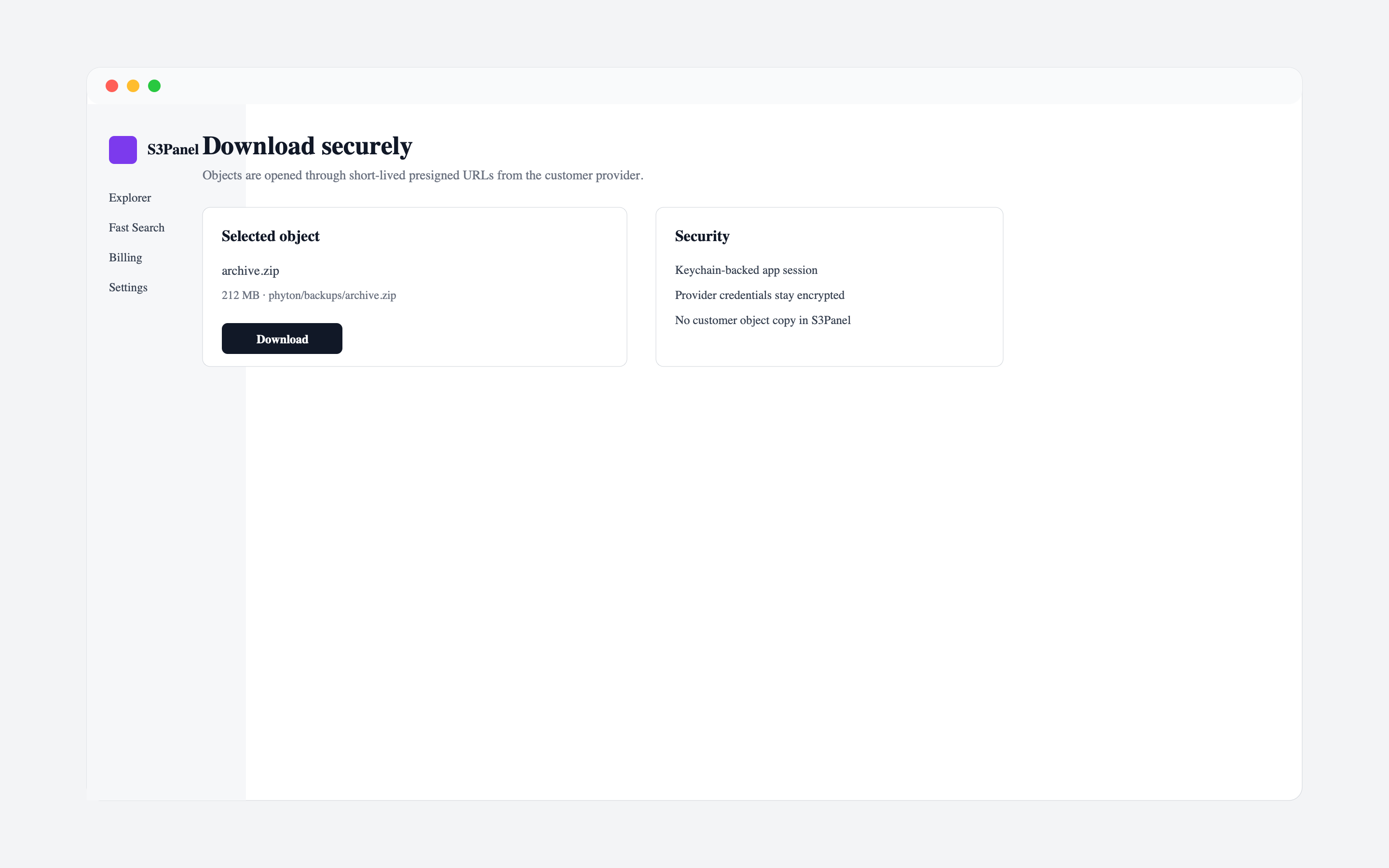
Presigned URLs
Security
Object metadata is easy to ignore until something breaks. A PDF downloads instead of opening. A browser caches an old image. A video has the wrong content type. A customer export needs a clearer filename. These problems often come from metadata, not from the object data itself.
In S3-compatible storage, metadata can describe how a file should be served, cached, downloaded, or identified.
Content-Type tells browsers and clients what kind of file they are receiving. For example:
image/pngvideo/mp4application/pdftext/csvapplication/zipIf this is wrong, the recipient experience can feel broken even when the file is correct.
Cache-Control tells browsers and CDNs how long a file can be cached. This matters for static assets, media, and public downloads.
Examples:
no-store for sensitive files that should not be cached.max-age=3600 for short-lived public files.public, max-age=31536000, immutable for versioned static assets.Do not use long cache values on files that are overwritten under the same key unless you want old versions to remain visible.
Content-Disposition can suggest whether a file opens inline or downloads as an attachment. It can also provide a friendly filename for downloads.
This is useful for customer exports, invoices, reports, and media review packages.
Custom metadata can store operational labels such as source system, job ID, customer reference, or processing state. Keep it small and purposeful. If you need complex querying, use a database or index rather than overloading object metadata.
S3Panel includes metadata editing as part of the object workflow, so teams can inspect and update common metadata without dropping into command-line tools for every correction.
Continue with practical S3Panel guides for object storage teams.